Chinese prefabricated and modular buildings are no longer just a low-cost construction option. For overseas buyers, they are becoming industrialized building products that can be designed, manufactured, shipped, and assembled with much shorter on-site work than many traditional projects.
China’s Modular Building Exports Are Growing
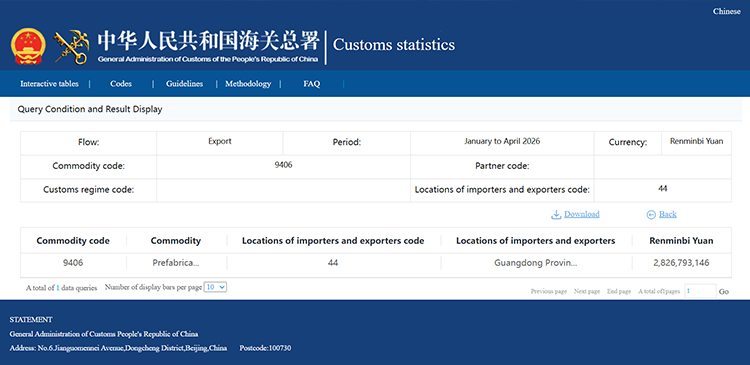
According to China Customs data cited in the source material, in the first four months of the year, Chinese companies exported RMB 2.826 billion worth of modular buildings through Guangdong ports. Shenzhen ports alone exported RMB 1.68 billion, up 19.6% year over year, reaching more than 150 countries and regions.[1]
This export momentum explains why more overseas buyers are comparing manufactured modular homes, temporary accommodation, modular hotels, elderly care apartments, and even wholesale modular homes from China.
From Factory Modules to Overseas Buildings
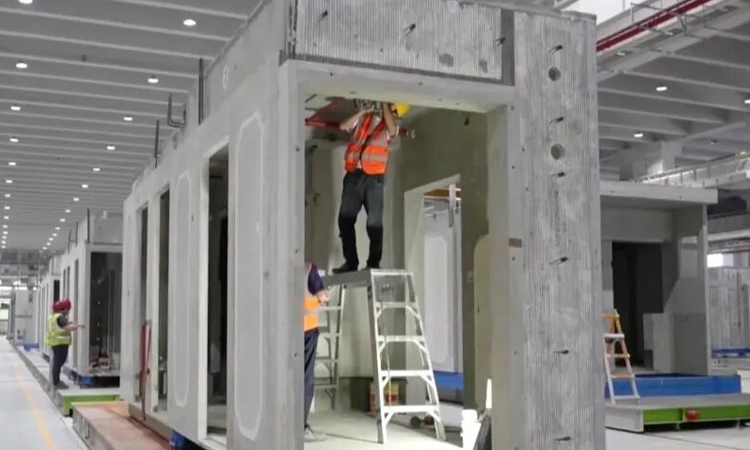
Modular construction means dividing a building into separate modules, manufacturing them in a factory, then transporting and assembling them on site. Compared with basic prefabrication, modular buildings are more integrated: structure, interior finishes, wiring, plumbing, bathrooms, and other systems can be completed before shipping.
That is why some buyers describe these projects as “giant parcels.” A project can leave China as finished modules and arrive overseas ready for lifting, connection, and final commissioning.
Two Real Project Signals: Elderly Care and Hotels
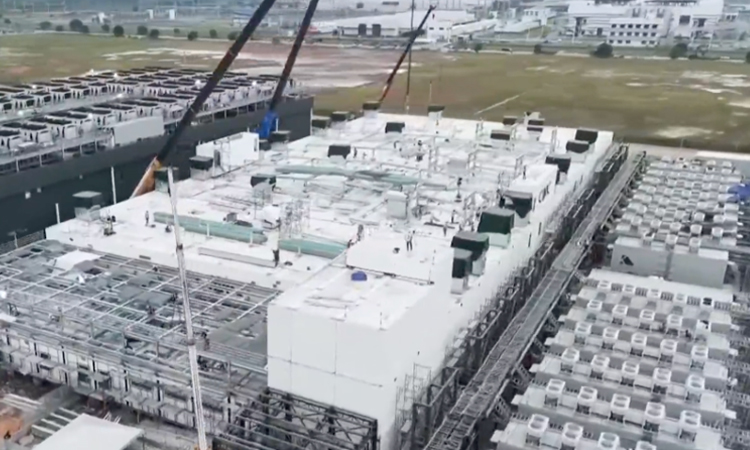
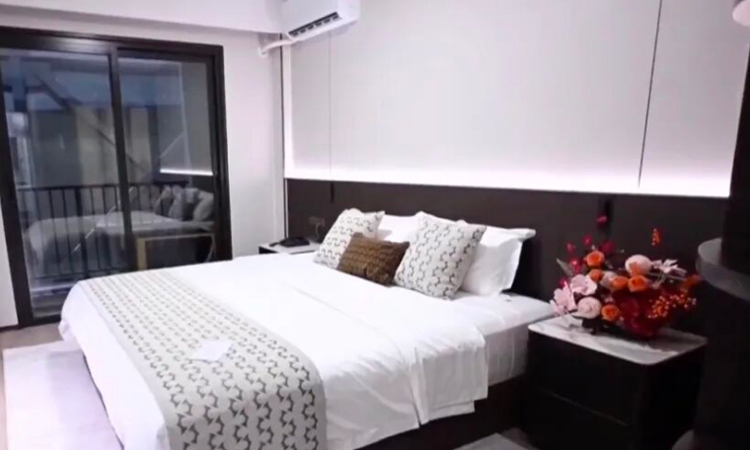
One UK elderly care apartment project used 63 highly integrated modules shipped from a Chinese factory. After arriving at the UK port, the modules were reportedly lifted and assembled on site within two weeks. The project covers about 3,000 square meters and provides nearly 80 elderly-friendly rooms with supporting public facilities.[2]
Another example is the Kikori modular hotel project in Papua New Guinea. The project covers about 3,275 square meters, consists of 84 modules, and includes 52 guest rooms and supporting facilities. It is also equipped with a photovoltaic power generation system.[3]
These projects show why energy efficient modular homes and eco friendly modular homes are becoming more attractive: buyers are not only looking at the building shell, but also at insulation, HVAC, ventilation, solar integration, accessibility, and long-term operating cost.
Why Factory-Built Housing Is Faster
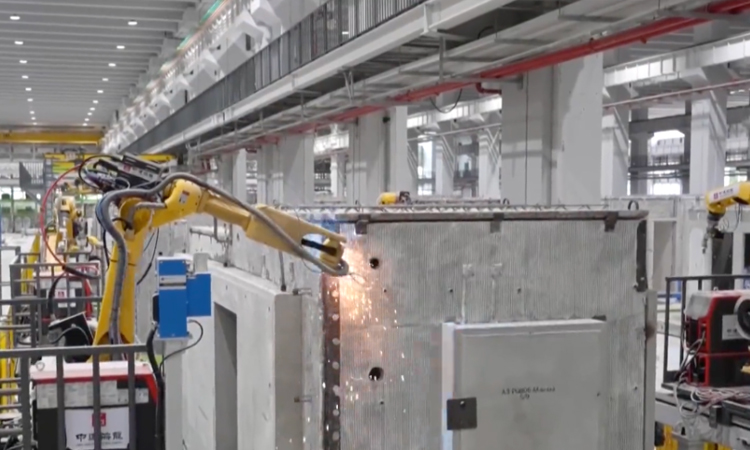
In a traditional construction site, many tasks happen in sequence: scaffolding, masonry, plastering, waterproofing, wiring, plumbing, and interior finishing. In a modular factory, many of these steps can run in parallel. One Guangdong modular building company said that more than 90% of the process, including the main structure and interior decoration, can be completed in the factory.
At CSCEC’s intelligent construction industrial park in Shenzhen, components such as ceilings, floors, water and electrical pipelines, and bathroom waterproofing layers are manufactured on production lines before being shipped overseas for assembly. With automated storage and intelligent production lines, the construction cycle can reportedly be shortened by more than 30% to 50%.[4]
What Overseas Buyers Should Check Before Sourcing
The global demand does not mean every supplier is suitable for every project. A buyer searching for modular home companies, modular house suppliers, or a prefabricated concrete house solution should confirm technical requirements before discussing price.
| Buyer Question | Why It Matters |
|---|---|
| What building code applies in the destination country? | Fire safety, structural standards, accessibility, and energy performance requirements vary by market. |
| Is the project for housing, hotel, elderly care, office, dormitory, or data center use? | Different use cases require different layouts, MEP systems, insulation, ventilation, and interior standards. |
| Will modules be shipped fully finished or semi-finished? | This affects shipping cost, installation time, site labor, and damage risk. |
| What energy and ventilation system is required? | Energy efficient modular homes need suitable insulation, HVAC design, fresh air systems, and local compliance. |
| Who handles installation and after-sales issues? | Large modular projects require clear responsibility for lifting, connection, commissioning, and defect correction. |
The Market Is Still Expanding
MarketsandMarkets projects the global modular construction market to grow from USD 109.60 billion in 2025 to USD 142.87 billion by 2030, at a CAGR of 5.4%.[5] This growth is supported by housing shortages, faster project delivery needs, labor constraints, hotel and dormitory projects, data center construction, and demand for more standardized building systems.
For buyers, China’s advantage is not just low manufacturing cost. It is the combination of design coordination, factory capacity, supply chain integration, export logistics, and project-based customization.
How KOISOURCING Can Help
As a Guangzhou sourcing team with long-term experience in HVAC and building-related supply chains, KOISOURCING can help overseas buyers identify suitable modular house factories, ventilation system factories, and related suppliers in China.
If you need a guangzhou modular house factory sourcing agent, we can help with supplier search, factory screening, requirement translation, quotation comparison, sample coordination, and follow-up for modular building components.
Frequently Asked Questions
Why are Chinese prefabricated homes becoming popular overseas?
Because many building processes can be completed in factories before shipping. This can reduce on-site work, shorten delivery time, improve consistency, and make large export projects easier to manage.
Are modular homes from China only for temporary use?
No. Chinese modular buildings are used for hotels, elderly care apartments, dormitories, offices, data centers, and other project types. The right use depends on design, materials, local code compliance, and installation quality.
What should I check before buying wholesale modular homes?
Check building code compliance, structural design, insulation, HVAC, ventilation, fire safety, waterproofing, shipping method, installation support, and after-sales responsibility before confirming an order.
Can KOISOURCING help source modular homes and ventilation systems?
Yes. KOISOURCING can help overseas buyers find modular house factories, HVAC suppliers, ventilation system factories, and related building product suppliers in China.
References & Source Data
- China Customs Statistics: http://stats.customs.gov.cn/indexEn
- CIMC Modular Building Systems, UK elderly care apartment project: http://cimc-mbs.com/cn/News/info_itemid_396.html
- Sina News, Kikori modular hotel project: https://www.sina.cn/news/detail/5305063276807541.html
- CIMC Digital Power, modular/prebuilt solution reference: https://www.cimcdigitalpower.com/cn/solutions.html
- MarketsandMarkets, Modular Construction Market: https://www.marketsandmarkets.com/Market-Reports/modular-construction-market-11812894.html